
Sept. 26, 2025 – One year ago today the JCC was closed. We already had 3.8 inches of rain the night before, and areas around town had flooded. We were watching a forecast that called for a hurricane, so we preemptively closed the JCC a second day.
While storms have impacted our mountains in the past, what unfolded in the days following was unimaginable. As Helene moved through Western North Carolina, our natural environment was altered, our homes and businesses ravaged, and our lives were forever changed. In the year since Helene, we have heard from so many of you, and we know that each of us has a story to tell.
To honor our community’s experiences, remember the wave of chesed (lovingkindness) that we received, and highlight how we came together with strength, empathy, and resilience, we will be sharing a variety of JCC community “storm stories” in the coming weeks.
November 7, 2025: Brook Hudson, Associate Director of Aquatics

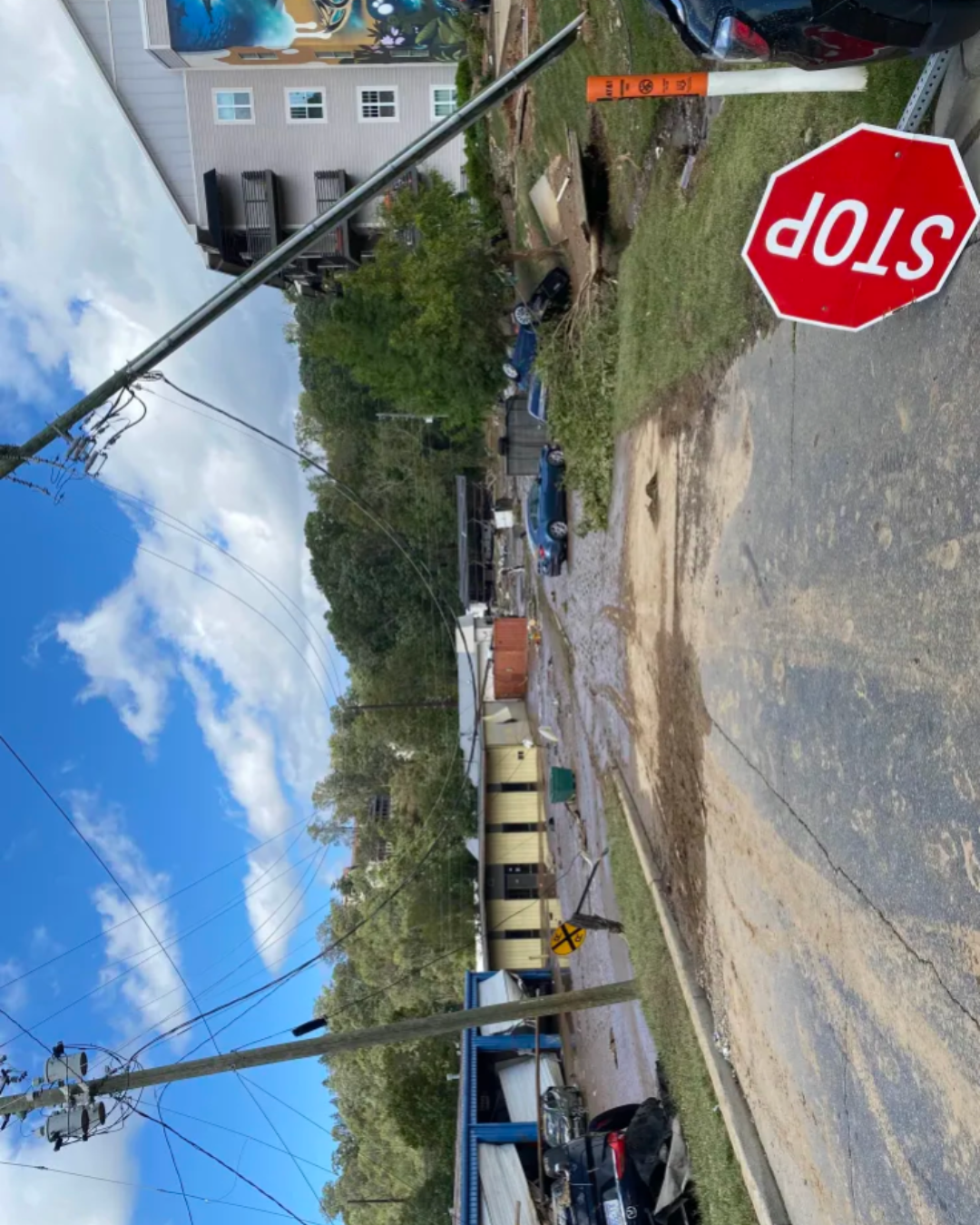
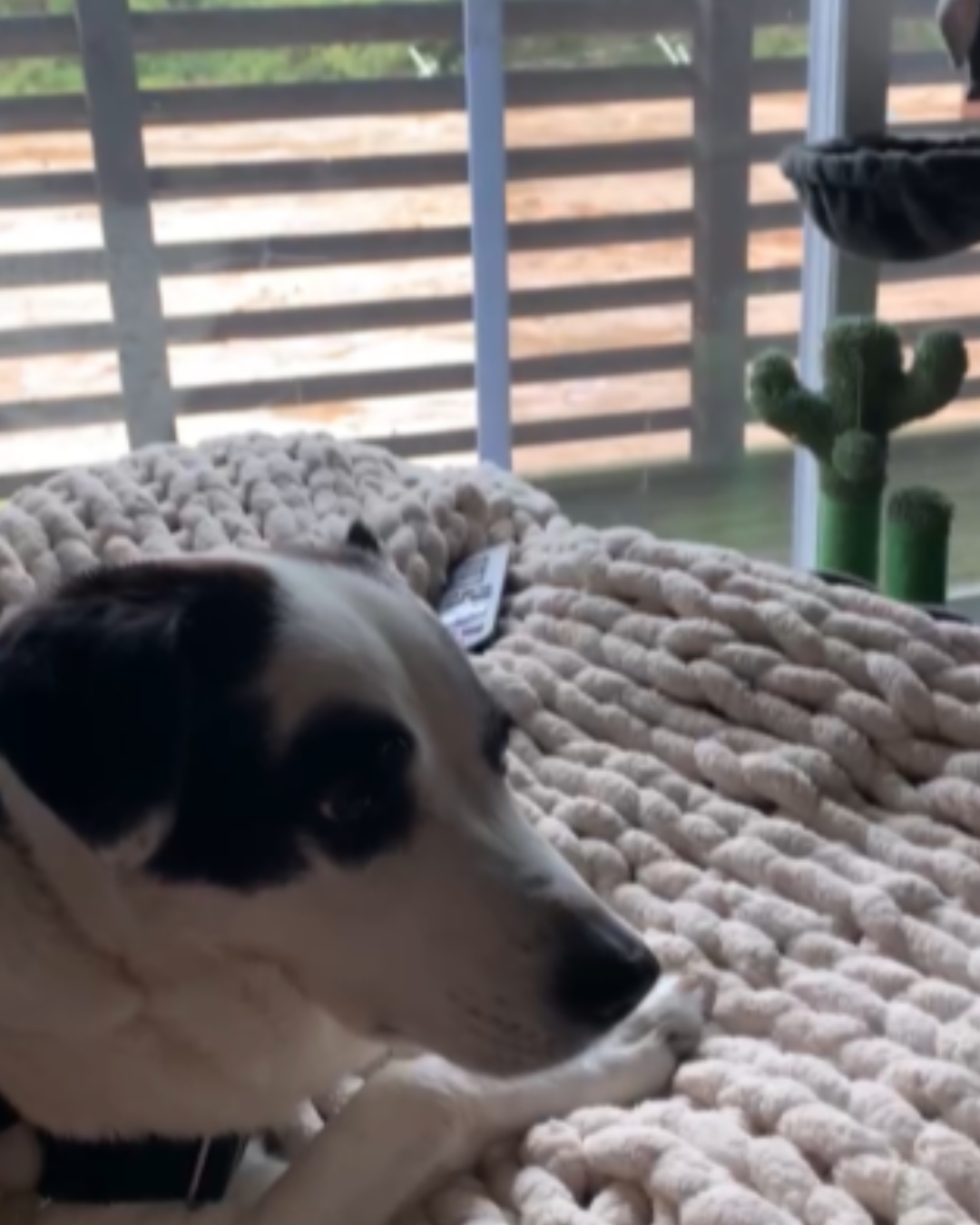
Associate Director of Aquatics, Brook Hudson, never imagined that Hurricane Helene would have such a dramatic impact on her life. On the night of September 26, she and her partner and their three pets, were in their first-floor apartment in Biltmore Village, just steps from the Swannanoa River. At 3 a.m., the power went out, but it seemed like any other storm, so she brushed it off. By morning, however, the river had risen to the top of their dog fence, and the situation quickly became critical.
They began moving cherished belongings to higher ground, hoping to save what they could as they realized the water may reach their apartment. In the midst of the uncertainty, a stranger offered them shelter in a second-floor apartment. With their three animals in tow, and a few bags, they relocated just before the water overtook the first floor. When Brook returned to her apartment one last time, water was already above her ankles. By the end of the day, four feet of water filled the entire first floor, leaving them trapped in the complex for three days with no way to leave. Thankfully, they had each other.
When they finally escaped, the reality set in: they had lost nearly everything—their home, their possessions, and their sense of stability. The days that followed were disorienting. There was no time to process, only to survive and find the next safe place to rest. With the help of the stranger turned friend, and the support of others, Brook and her partner and their three pets sheltered where they could, and after a failed attempt to evacuate to Brook’s family’s home, they landed with Aquatics Director, Wendy Lawrence. With the support of friends and community, they could begin the long road to recovery.
The support from the JCC community and beyond was immediate and overwhelming. From clothing and meals to a place to sleep, people stepped forward without hesitation. For Brook, what stood out most was the resilience of the community. Helene took a lot from Brook and her partner, but it also revealed something powerful. She said, “When everything else is gone, we are never truly alone. Neighbors helping neighbors, strangers becoming friends, and people putting their own needs aside to lift others up – it was nothing short of inspiring. It revealed the power of unity and human connection.”


October 31, 2025: Elizabeth Newman, Shalom Children’s Center Parent and JCC Board Member

Our family (Adam, Liz, Benjamin – 7, and Gabriel – 3) was lucky during Helene. Our finished basement flooded badly, but that was the extent of damage to our house. We were well-plenished and physically unharmed. And we had a soft place to land.
Three days after the hurricane struck, with no idea when water, electricity, cell service, or internet would return, we decided to head to Baltimore, where Adam grew up. His parents and many relatives still lived there, and we visit there at least once a year, so it was a natural place to regroup and figure out our next move.
One potentially big problem arose immediately, though: we had roughly a quarter tank of gas in our car, but there were no gas stations open around town. Additionally, the highways heading in the direction of Baltimore were closed. This meant we’d have to go south to go north, while hoping that the rumors were true that some gas stations were open in Greenville, in upstate SC. (Lesson learned: always fill up the night before a hurricane is supposed to hit!)
An hour and a half later, we pulled into a gas station outside Greenville that was operating at half capacity and without the benefit of credit card terminals. There were many lines of cars and the attendants were rightly grumpy having to act as traffic controllers, but we were overjoyed and relieved to fill up.
Now that we finally had cell service, we contacted Adam’s parents, Rob and Ellen, to let them know that: a) we were coming to visit for the High Holidays; and b) our stay would be… indefinite?
They were thrilled to host us. They also, no doubt, were grateful that they hadn’t yet downsized from the suburban home where Adam grew up with his two siblings. Our digs would be tight but comfortable.
With Asheville schools and the JCC closed indefinitely, our kids were soon ensconced in Adam’s 1980s/1990s childhood lifestyle. It was amazingly easy to enroll Benjamin in Fort Garrison Elementary, where Adam and his sibs had attended, thanks to a federal law mandating school enrollment for children who are homeless or displaced by natural disasters. But what about Gabey? In Asheville, like so many other places, finding a preschool slot can be really difficult. But that, too, turned out to be amazingly easy…
Having had our kids at the Asheville JCC since 2020, we immediately contacted the JCC of Greater Baltimore about their childcare offerings. They got back to us almost immediately to let us know that yes, there was a spot for Gabriel .
The preschool—the Stoler Early Learning Center, located at the J’s Owings Mills campus— was an easy drive down Park Heights Avenue from Rob and Ellen. Their family had a lot of connections to it. Adam attended preschool and kindergarten there, and there is a tree planted next to the main building in honor of Adam’s grandmother, Esther Rosen. The preschool nurse knew Marcia and Adam’s grandfather, Mike Roseman. These connections were comforting. But most importantly, we knew that the childcare would be top-notch based on our experiences here in AVL at Hilde’s House, Shalom, and JCC Kids.
Our time spent away from Asheville during the aftermath of Helene was weird. Adam and I were stressed. We were trying to get our actual jobs done while dealing with insurance and FEMA claims. We were devastated about the destruction in AVL and WNC and all the lives that were lost. We were uncertain about when we could come back to Asheville, and what it would be like when we did. For a while, there was no timeline for when school would be open or when water would come back.
These stressful times were easier because both of our kids had great places to go. Benjamin loved Fort Garrison – he quickly made friends and went on his first field trip. The 2s teachers at the Stoler JCC, April and Autumn, took special care of Gabriel, who was definitely rattled by this new and unexpected transition. He got to make afternoon snacks in the child-sized kitchen at Stoler and play outside on well-appointed playgrounds. Both Benjamin and Gabriel got their school photos taken (lovely mementos).
But things were also really good. The weather was beautiful. We spent time with our extended friends and family. We got to eat lots of hamentaschen from the local deli, Lenny’s. We went apple picking, and trick-or-treating with our cousins. Adam got to see Duran Duran in downtown Baltimore (they still rock!). The community welcomed us and made space for us. I’ll be forever grateful to Fort Garrison Elementary and the Owings Mills JCC.
We returned to Asheville on November 2 to an Asheville that was profoundly changed. But we were all happy to be home. As Gabey told us, “I like the old JCC.”


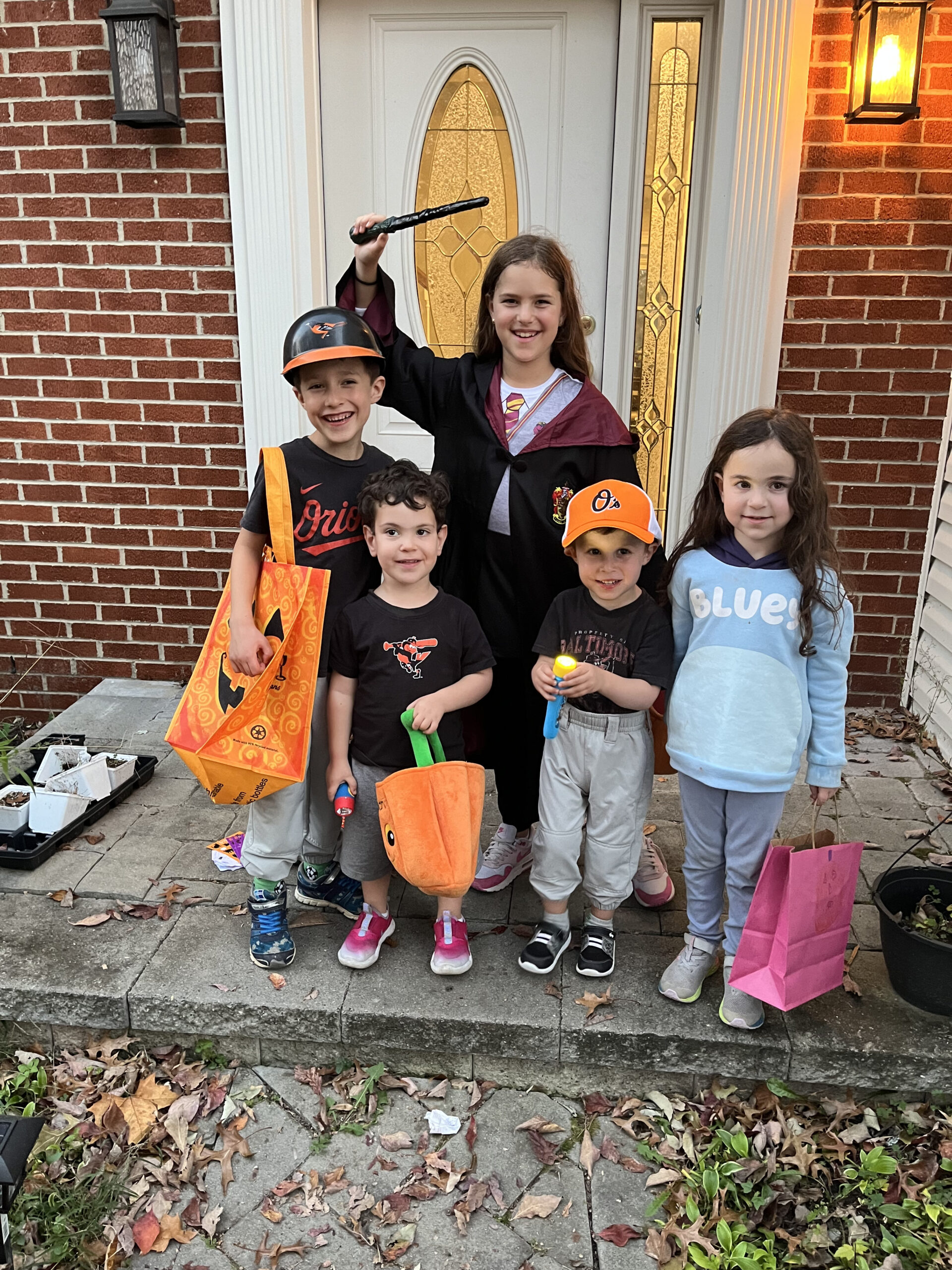

1: flooded basement; 2: self-evacuation from AVL on Monday 9/30; 3: Rosh Hashanah Family Services at Beth El Baltimore; 4: Benjamin’s 1st Day at Fort Garrison; 5: Gabriel’s 1st Day at Owings Mills JCC; 6: Gabriel eating snack in Owings Mills JCC kid kitchen; 7: Benjamin’s school picture at Fort Garrison; 8: nice day out with family; 9: us with Rob, Ellen, Richard, and Marcia at Friendly Farms (favorite family restaurant); 10: Gabriel and Miss April, 2s teacher at Owings Mills JCC; 11: Trick or Treating with Cousins; 12: On the Way Back to AVL!
October 24, 2025: Hannah Furgiuele, Associate Director of Communications and Marketing

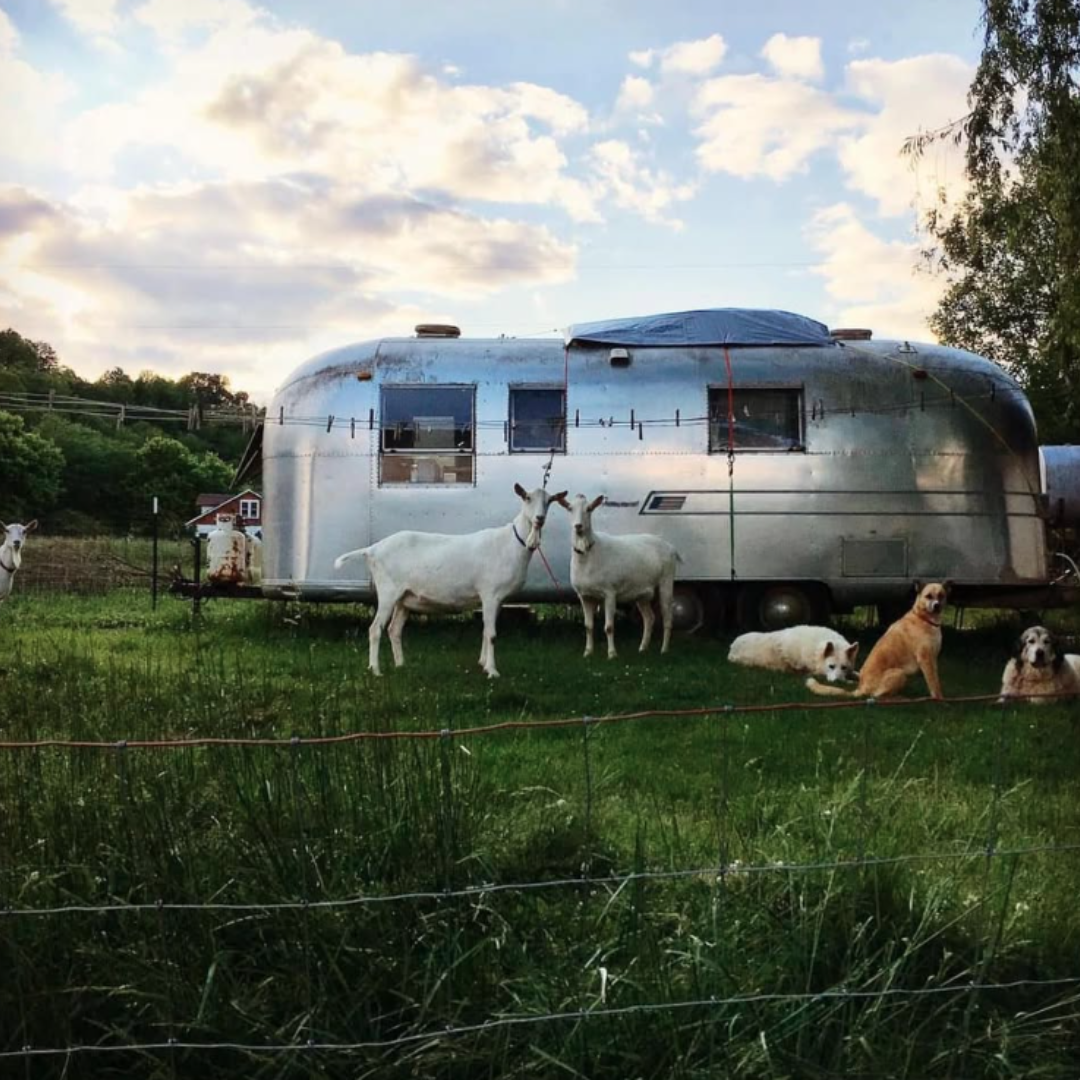
The evening before Helene hit, my son Sammy and I were nestled into our new home tucked against the mountainside, bordering Pisgah National Forest. I had secured our four goats into their barn, and the dogs and cats were safely indoors. It felt peaceful. Sammy was FaceTiming with my brother’s band, listening and playing along as they practiced. On a whim, right before I went to bed, I filled the bathtub with water, topped off a few bottles and the tea kettle—just in case. As I lay in bed listening to the wind, I could feel the energy of the storm.
Unlike the six acre farm along the Ivy River’s main tributary from where we had just moved, our new home sat safely out of the floodplain, not too close to any trees, and seemed like a good place to ride out the storm. I had weathered mountain hurricanes before. In fact when I first moved to the area after college to participate in AmeriCorps, one of our first assignments was distributing water to the most rural communities of Western North Carolina after Hurricane Ivan and Hurricane Frances hit back to back, causing power outages, mudslides, and flooding.
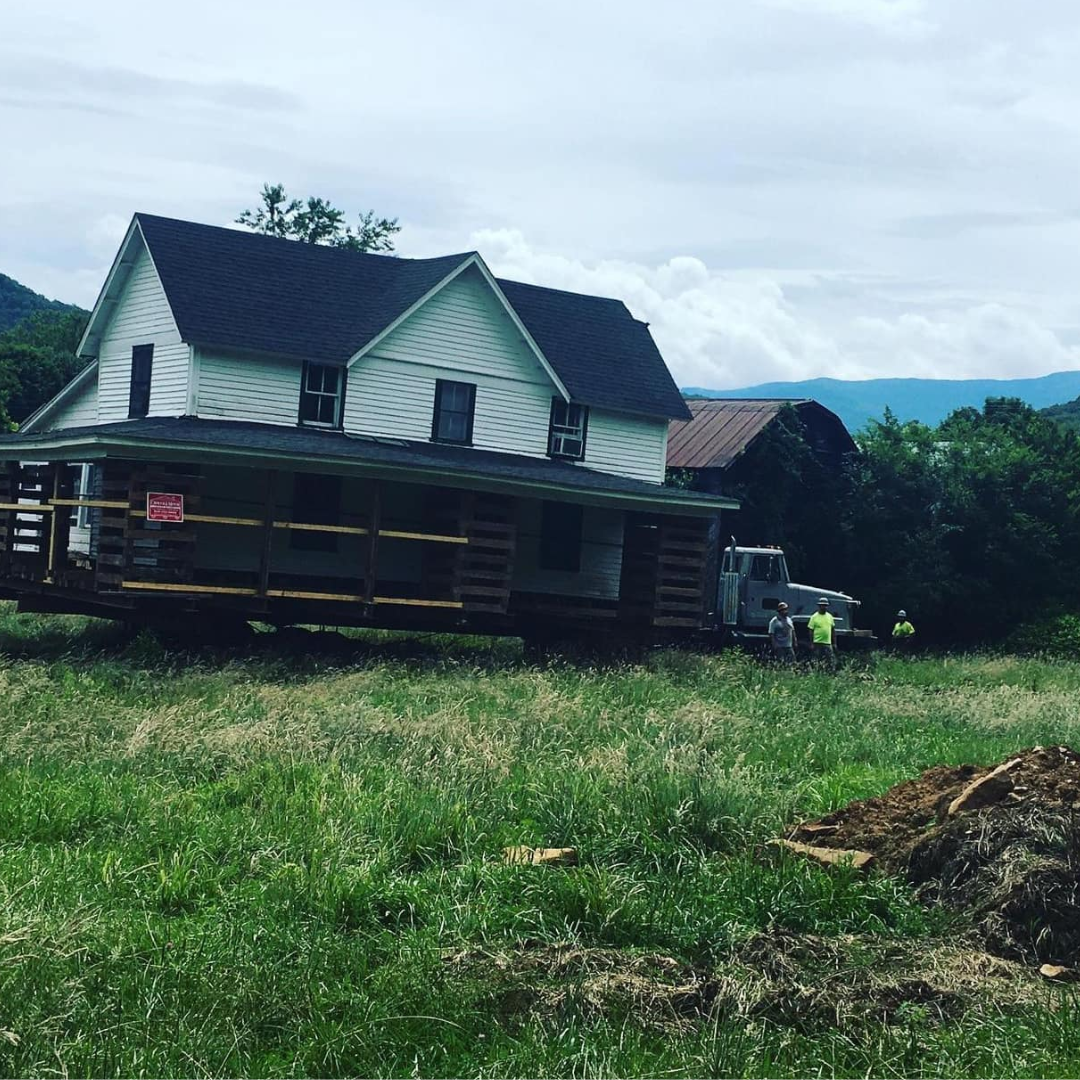
I had also responded to two heavy hitting hurricanes in 2019 and 2021 at my old farm. The damage was much more isolated, and therefore didn’t have the same attention as Helene, but they were a huge blow to my home and farm infrastructure. Those experiences taught me climate change wasn’t a distant threat; it was already reshaping our lives. I poured myself into making the property resilient—moving structures out of the floodplain, reinforcing foundations, and restoring two historic homes–one a large, classic 2-story white farmhouse, and the other small guest house. I had to dig up resources myself, deplete all my savings, and hope that everything I did would ensure safety in an uncertain future. Countless neighbors stopped by at different moments throughout the process to say how much they appreciated I was saving the historic farm, sharing stories of growing up playing in the old barns or sitting on the gorgeous wrap-around porch that sat in the shade of a giant willow tree with views of Craggy Mountain.
By morning, the forecasts seemed exaggerated. From our tucked-away perch, everything looked calm. The North Fork of the Ivy River had risen, but nothing alarming. By midday, everything changed. The Ivy broke her banks and washed out the road to our new home. Trees fell, and our bridge—our lifeline–was barely holding on by just a few thin layer of asphalt.
Just before cell service disappeared, I received two calls—one from my parents, and one from a neighbor at our old home. Her voice was relieved to hear we were okay, but her next words hit like a punch to the gut: “Your barn is gone. Your airstream is gone. Louise’s house and barn are destroyed. Greta’s house is falling into the river. Kenneth’s store is destroyed, and Tommy’s trailer has washed downriver… the kids came up to our house when the water rose too close to the big house.” “The kids” she referred to were my tenants to whom I rented the old farmhouse (the big house) a few months earlier, “But Hannah, the little house is still standing.”
The little house.


It’s final resting place above flood elevation of Ivy River just before Helene
It was the second home on my original farm. Flooding in 2019 prompted me to move it to higher ground and rebuild it with a foundation engineered for flood resilience. Just months earlier, I’d sold it to a sweet young woman starting her own chapter. That house stood. A small miracle in the midst of so much loss. I clung to that sliver of hope. Amid the wreckage, it was proof that preparation mattered, that climate-conscious choices could make a difference. That we can build back stronger.
I jumped into my old Honda and took a logging road through brambles and mud—doing everything they say not to do. I drove under downed power lines, around fallen trees, and through moving water beside the swollen river. I had to see it for myself. I had to make sure everyone was okay.
Eventually, I arrived—just three miles away, but a world apart. The bridge was blocked by mountains of debris, trees, and raging water. From across the river, I stared stunned at the home I’d lived in for nearly a decade, where I brought my son home from the hospital, where stories were stacked as high as the tin roof of the old tobacco barn. Now, it was unrecognizable.
Before the storm, the property had two historic tobacco barns, each over 100 years old, built from ancient chestnut wood and steeped in history. Just a week before the storm, I made the heart-wrenching decision to rehome my donkeys, Eddie and Felix from that very spot. A kind man from middle-Tennessee met me in Knoxville to bring the boys back to his home. He was elated. I cried, watching their ears flick back and forth, confused and distraught to be driving away from me. I didn’t know then it would be an act of grace—the barn they lived in, their pasture, the fencing—everything was swept away. Had they stayed, they wouldn’t have survived. Another sliver of hope.
The second barn still stood, but its contents and all the valuables I had not yet had time to move to our new hope were ruined. The well that served both of the houses on the land was covered in mud and sludge, destroyed.
A couple weeks later, a friend with a tractor joined me to begin the cleanup. We suited up in Tyvek suits, gloves, and masks. A couple hours in, I stepped outside for water and saw a dozen people walking down the gravel driveway. They were from California, part of a church group that had come to help wherever help was needed. Without hesitation, they got to work. What would’ve taken us days was done in hours. Before they left, they handed me an envelope—funds from their congregation. I expected a small donation. Inside was $2,000.
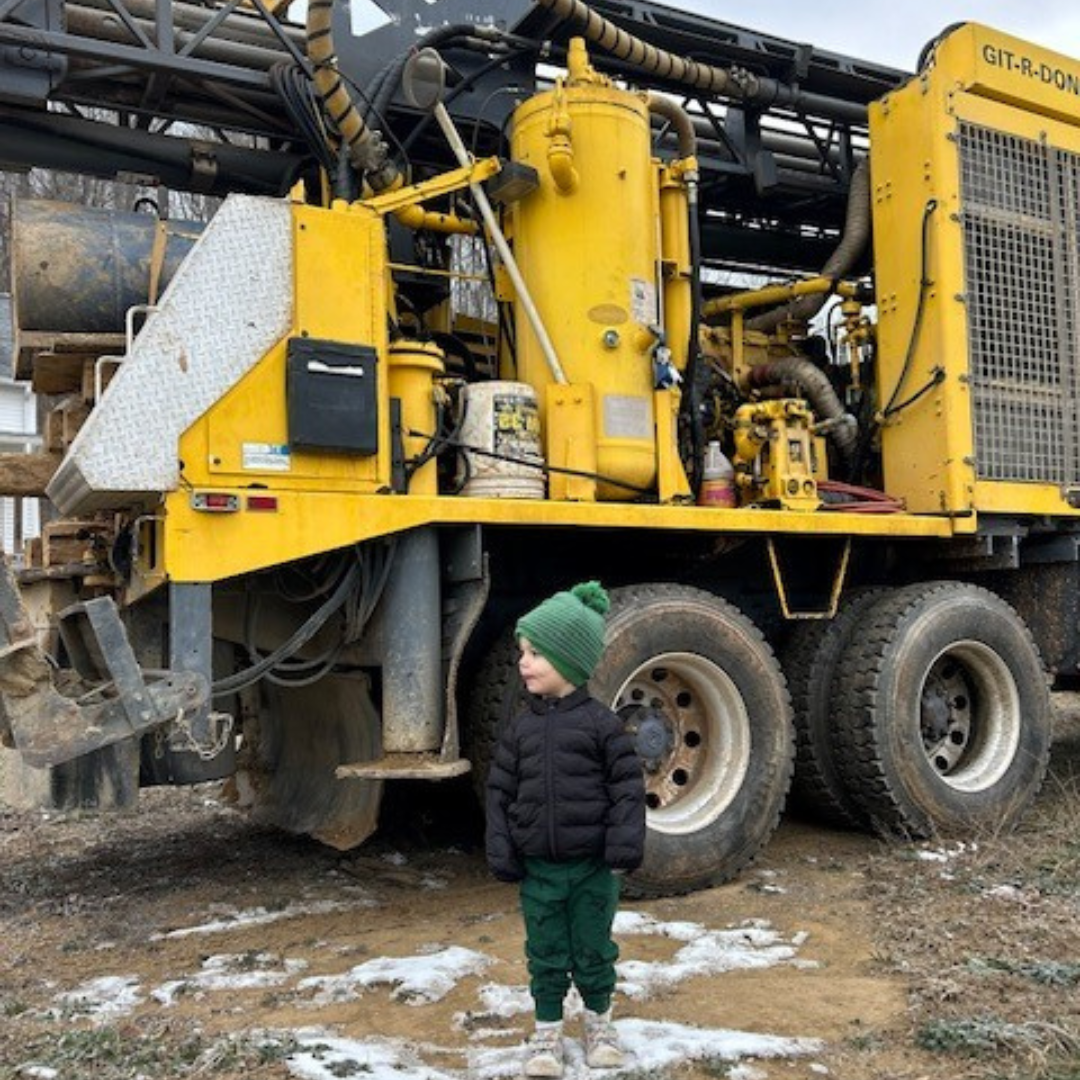
I was speechless. I tried to give it back, saying others had lost more than me, but they were insistent. I split it with my neighbors, but since the property was no longer my primary residence, FEMA aid wasn’t an option. Their gift was a lifeline. All they asked was that I send pictures when the new well was drilled.
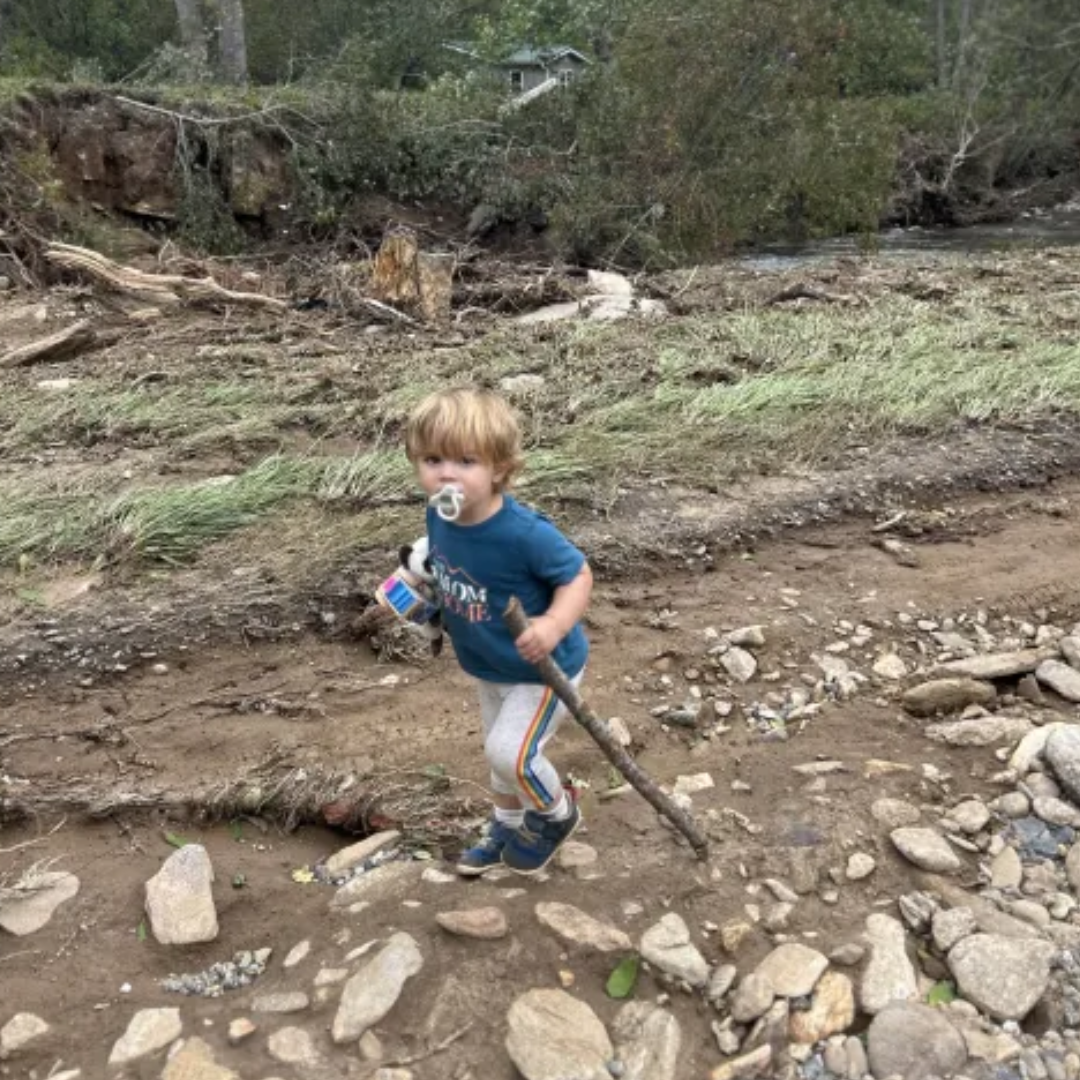
In the days that followed, we cooked over open fires and shared what we had. Ivy Creek Family Farm gave away all the produce that hadn’t been destroyed. Sammy, usually picky, ate his first (and possibly only) tomato sitting in the mud beside a broken bridge—his hands dirty, his smile sweet.
We gathered in Barnardsville for a community meeting a mutual aid station was formed. I left my truck at the post office with the keys hidden so friends stranded by the broken bridges throughout our community could access food, medicine, and supplies. I opened up what little fencing remained on my old farm to a neighbor’s horses who lost their fencing, but gratefully not their lives. Neighbors helping neighbors. “I see you. You see me. We’re in this together.” That was the spirit.
We were without power for 16 days. But we had a roof over our heads and neighbors as tough as the Appalachian mountains. We shared propane, water, and silver linings. We carried what we needed in packs on our backs and leaned into the rhythm of survival. Sammy and I evacuated to Atlanta for a few nights to stay with my brother, and the shift was jarring. One day I was boiling water over an open fire just to wash dishes, and the next I was sitting at my nephew’s baseball game, eating ice cream under a clear sky. It was a strange, almost disorienting experience—two realities coexisting. One marked by survival and loss, the other by normalcy and comfort. That contrast made everything feel more fragile, but also more precious.
The JCC graciously continued to provide all employees with our regular paychecks. That stability allowed me to show up for my neighbors, to coordinate aid, and to keep Sammy safe and grounded through it all. I was grateful to meet with Ashley at the Baptist Church in Weaverville to help write communications and share resources with our community. It gave me a sense of purpose and belonging, knowing the JCC was there for us during this time.
My graduate studies in Appalachian Studies and Sustainable Development taught me about the deep-rooted self-sufficiency of Appalachian communities and the ways we can build communities that can tackle the climate and economic challenges of our times. I had read about it, studied it, admired it. But I hadn’t truly witnessed it—until Helene. In the shadows of disaster, I saw something profound: the hope that we can rise above our politics, our religions, our differences. When the floodwaters came, none of that mattered. We saw each other for who we truly are—humans, neighbors, a community bound not by ideology but by care, shared experiences and hope.
Thankfully Sammy was too young to grasp the severity of it all. To him, it was an adventure—machines working, neighbors gathering, and the joy of seeing community in action. Knowing Eddie and Felix were safe, munching oatmeal cream pies in Tennessee, gave me peace and a sense of trust that we would recover.
As a mother, I wanted to create a sense of safety for Sammy, even when everything around us felt uncertain and overwhelming. Finding small moments to be playful, to laugh, to hold him close—that’s what kept me going. Those simple acts of love helped me stay steady, even when I didn’t feel strong.





October 17, 2025: Dave Love, JCC Board President

When Tropical Storm Helene hit Western North Carolina, JCC board president Dave Love was stuck in a hotel room in Baltimore, having been in Washington, DC for work.
Without cell service back home, he waited nervously, reading social media to try and piece together what had happened to his mountain community. “I think I knew more about the big picture than folks in Asheville—but far less about the details of my own neighborhood.”
When Dave arrived home several days after the storm, his family was safe, but his neighborhood was in bad shape. Watching the news from afar, he saw images of flooded roads, downed trees, and power outages, but it was hard to grasp the full emotional and physical toll from a screen. Upon his return, he spent a lot of time with neighbors to address the immediate crises–cutting down trees, clearing debris and roads, sharing meals, and hauling water.
Due to the extended water crisis that impacted Asheville, Dave’s family decided to evacuate to Chapel Hill and live with his brother and his family temporarily. He and his wife enrolled their kids in a local school with their cousins for several weeks. “It was a surreal experience, and our kids didn’t love the idea of going to a new school at first, but having a daily routine helped everyone.”
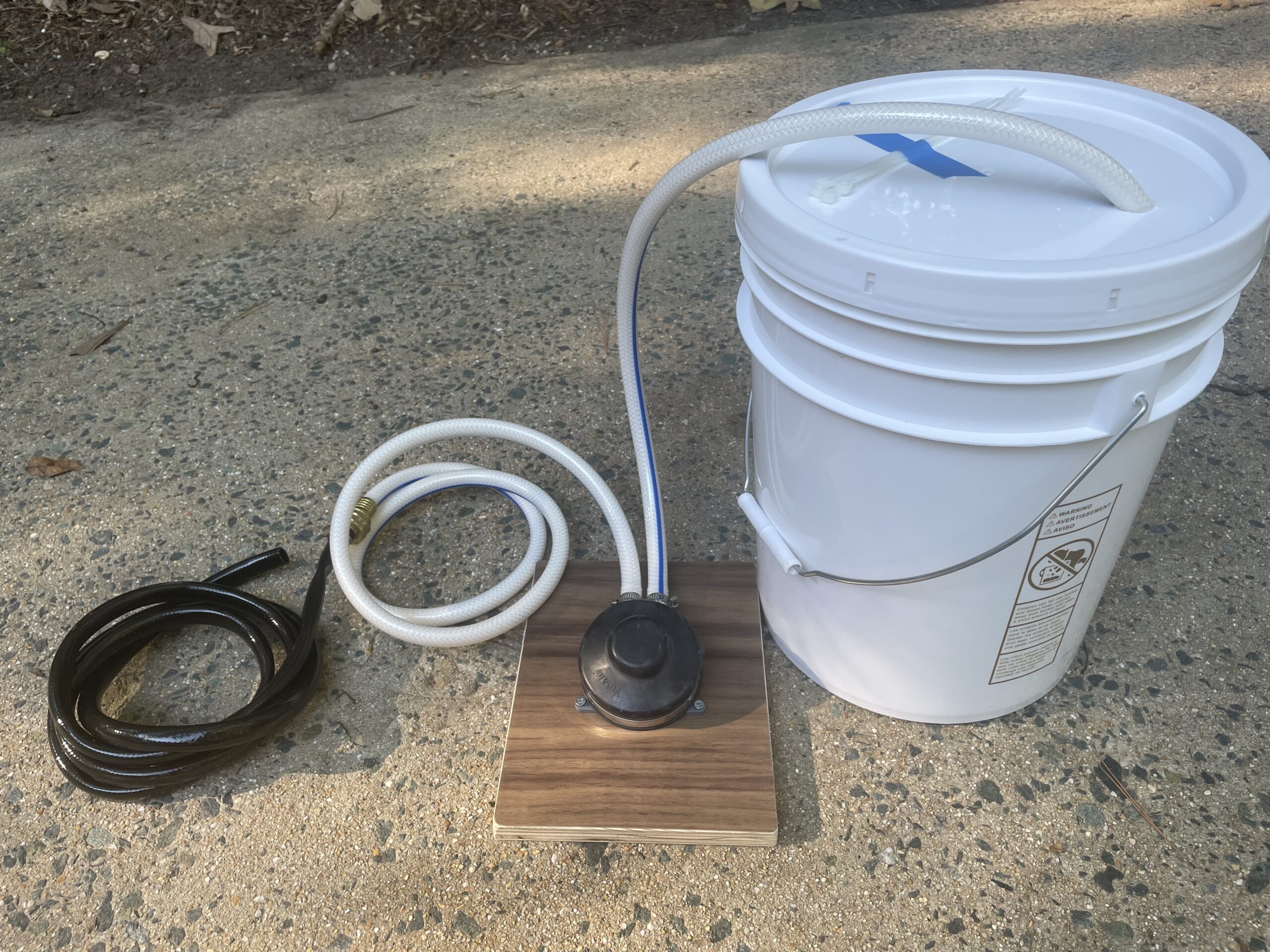
While his wife, Wendy, returned to Asheville to help reopen her architecture firm, Dave supported recovery efforts from afar. In his role on the JCC board, he prototyped and built a dozen handwashing stations—an effort that proved to be an essential step towards Shalom Children’s Center ability to meet North Carolina licensing requirements and reopen its doors to families.
“The months after Helene were some of the most challenging of my life,” Dave reflects. “I’m grateful we had support from family, friends, and our community. Having the JCC and local schools reopen was an important part of getting our lives back together.”




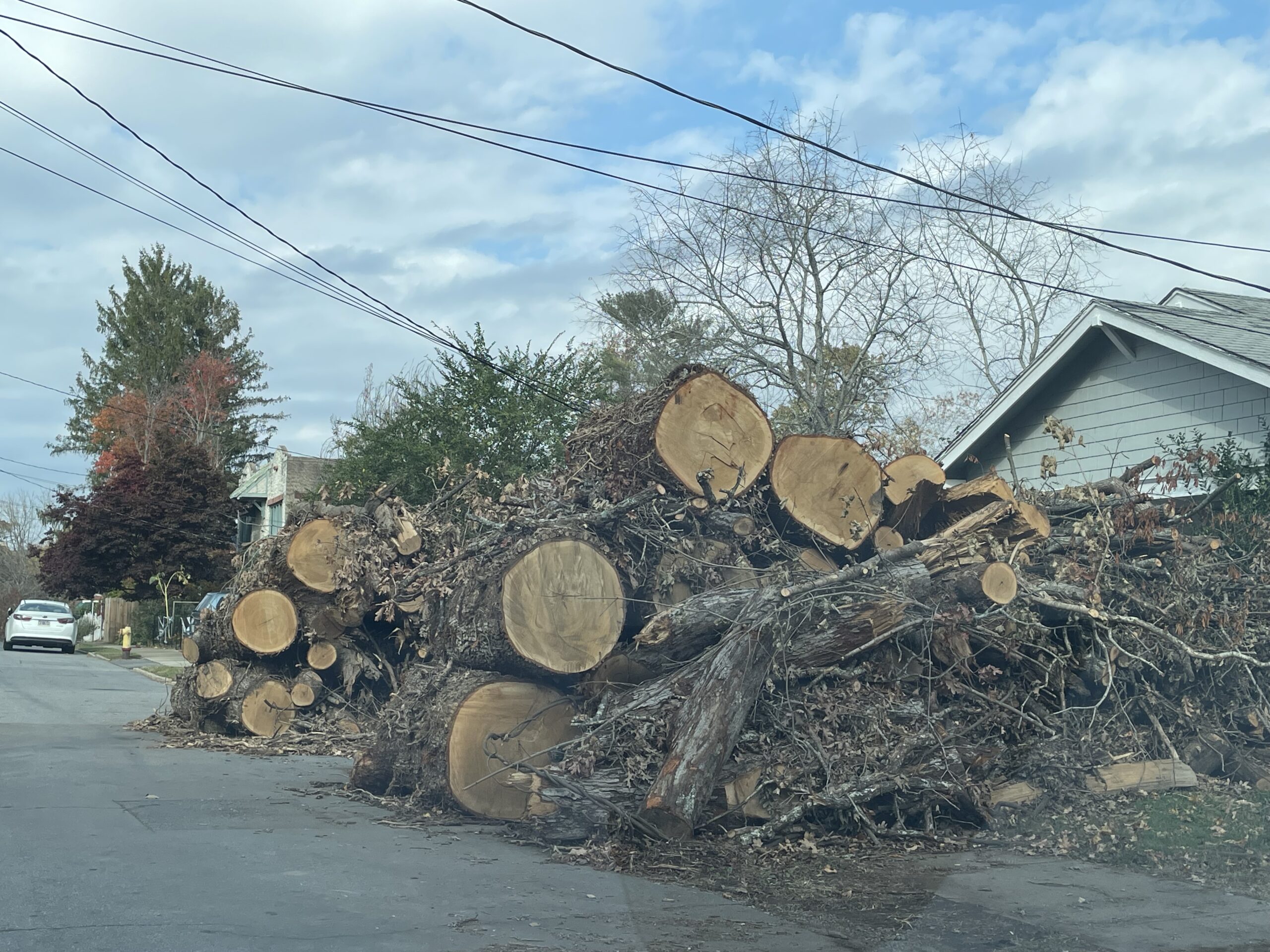
October 10, 2025: Caroline Bloom, Associate Director of Finance

Caroline Bloom at her animal sanctuary, Beautiful Chaos Animal Sanctuary
When Helene swept through Western North Carolina, Associate Director of Finance, Caroline Bloom, found herself without power or any way to connect with others in or outside the region. She and her partner, Ben, run a small animal sanctuary just outside Asheville, and their first concern after the storm was the safety and well-being of their animals.
Though the wind and rain were intense, their greatest worry was the distress it caused their animals—and the loss of income that followed, as both of their jobs were disrupted: Caroline’s previous employment ended permanently, and Ben’s temporarily.
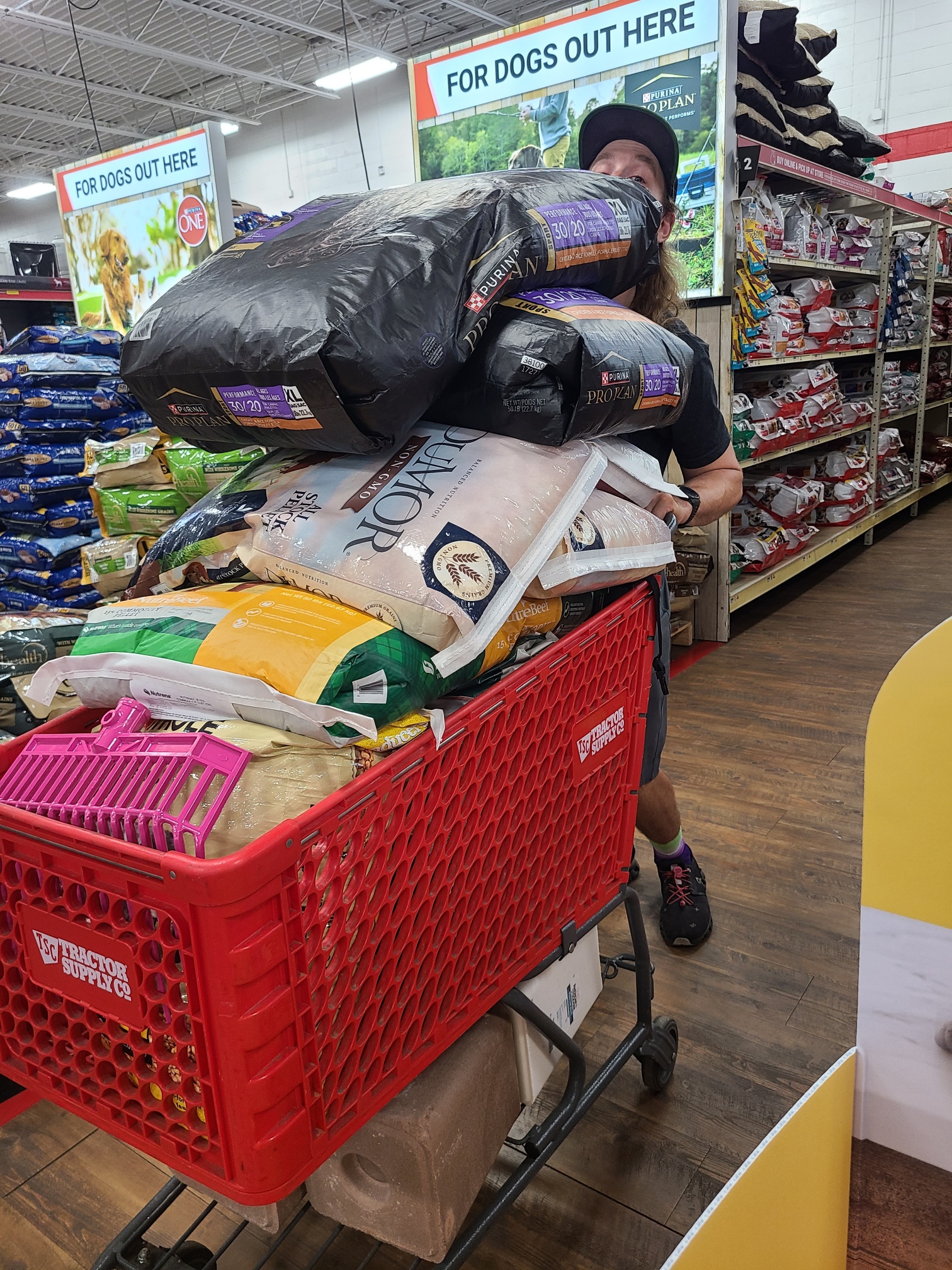
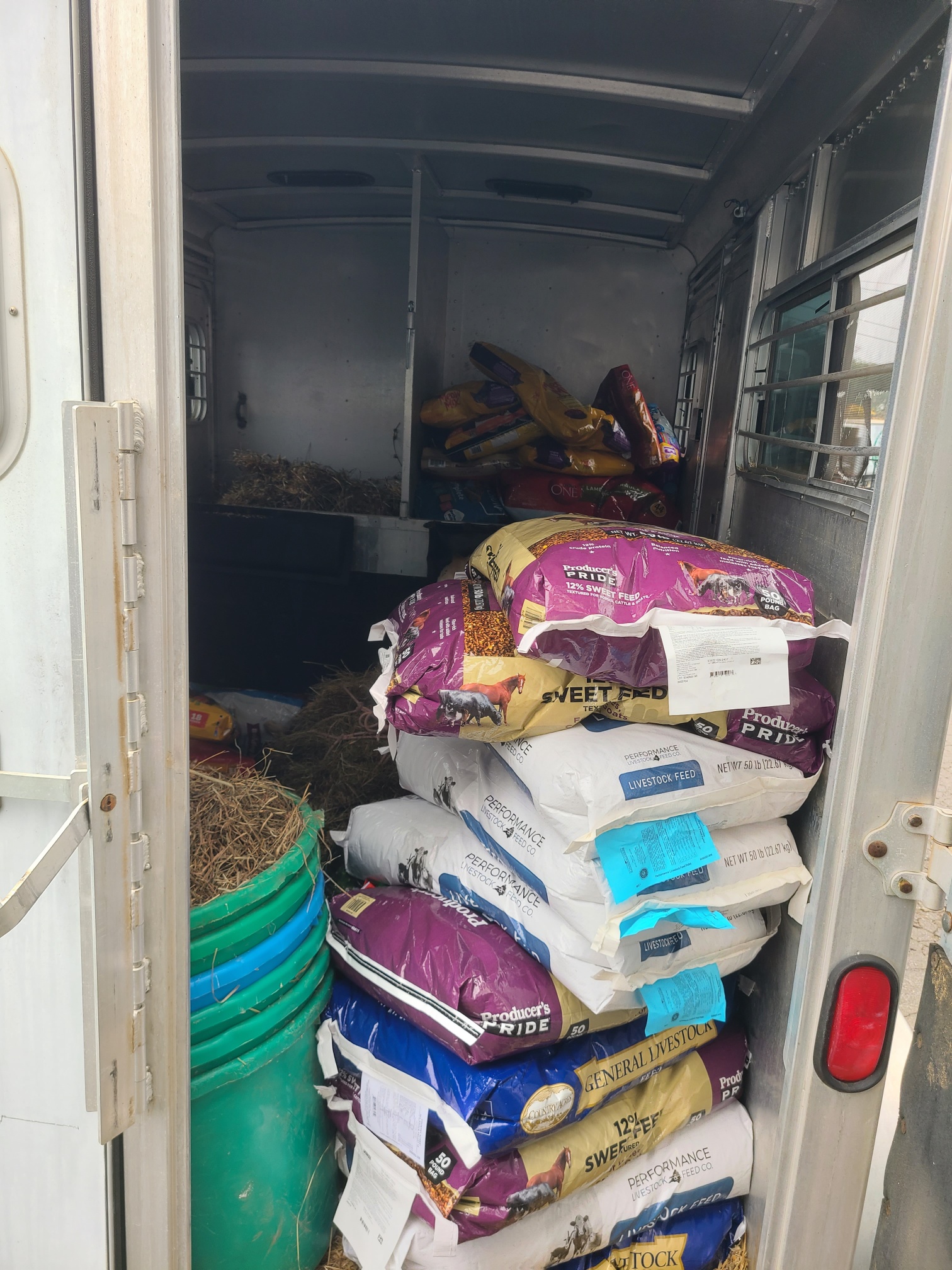
Despite these challenges, Caroline and Ben quickly turned their focus outward. After biking to find cell service and understanding the full scope of the storm’s damage, they began volunteering wherever help was needed. With minimal damage to their own property, they joined forces with others in the region—checking on neighbors through Congregation Beth HaTephila’s Caring Committee, helping distribute water at the Asheville JCC, and supporting the Red Cross with emergency relief efforts. They worked alongside Honalee Stables and Pineview Veterinary Hospital to deliver equine supplies, partnered with Mountain Foods to help feed neighbors, and connected with Montgomery Sky Farm and other organizations to distribute animal supplies coming in from outside the region.
Caroline shared that while media coverage often portrayed division, what she witnessed was unity and generosity. “People were literally giving their last supplies to help others,” she said. “This town and its people are incredible.”
Her story is a powerful reminder of the resilience and compassion that define our community. In the face of hardship, neighbors became lifelines—and together, we rose stronger.




October 3, 2025: Ashley Lasher

Ashley’s daughters play games by flashlight in the days following Helene.
Click here to read the full article in E Jewish Philanthropy







September 26, 2025 : JCC Security and Facilities Director, Joseph Nunan.

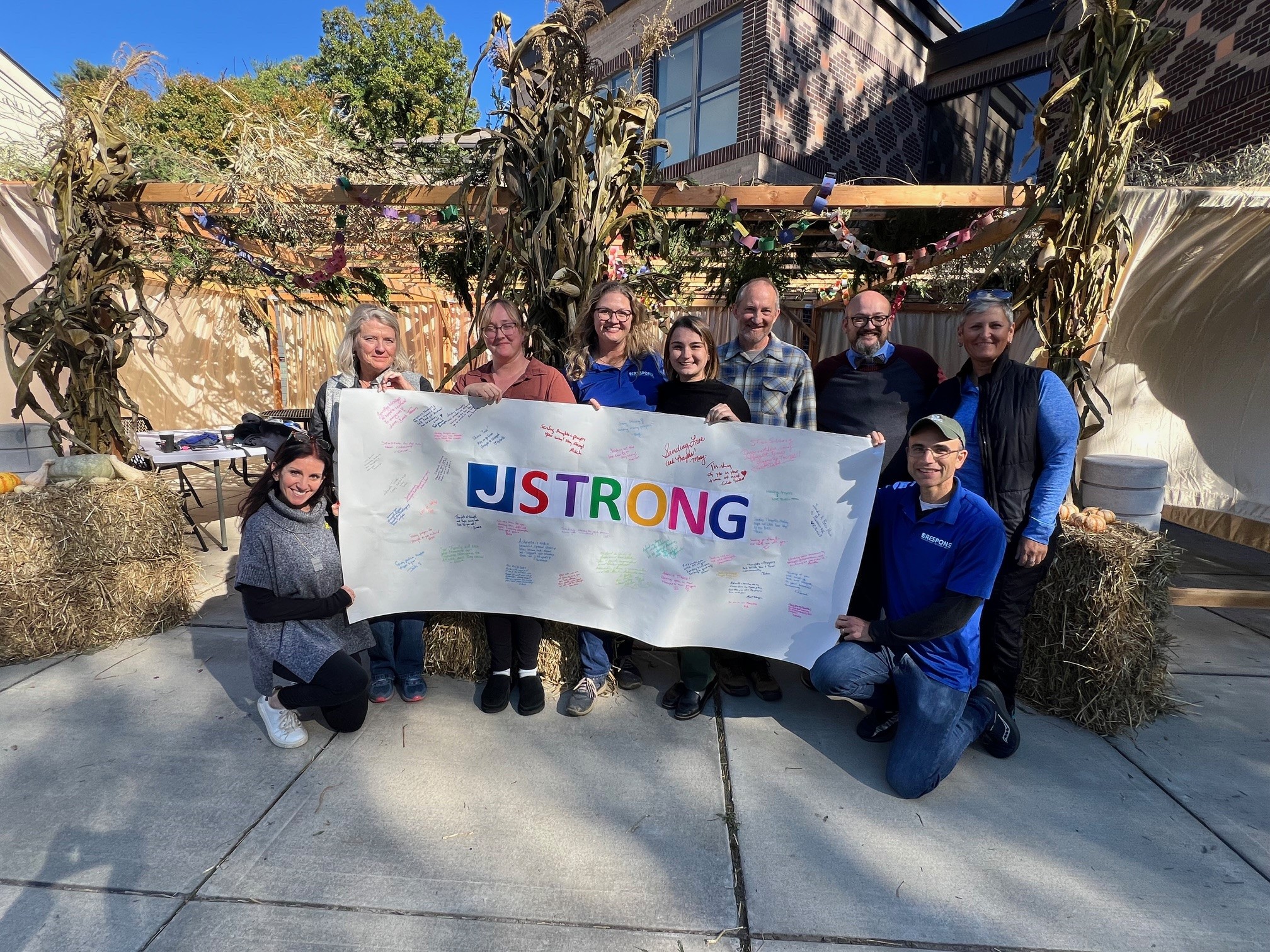
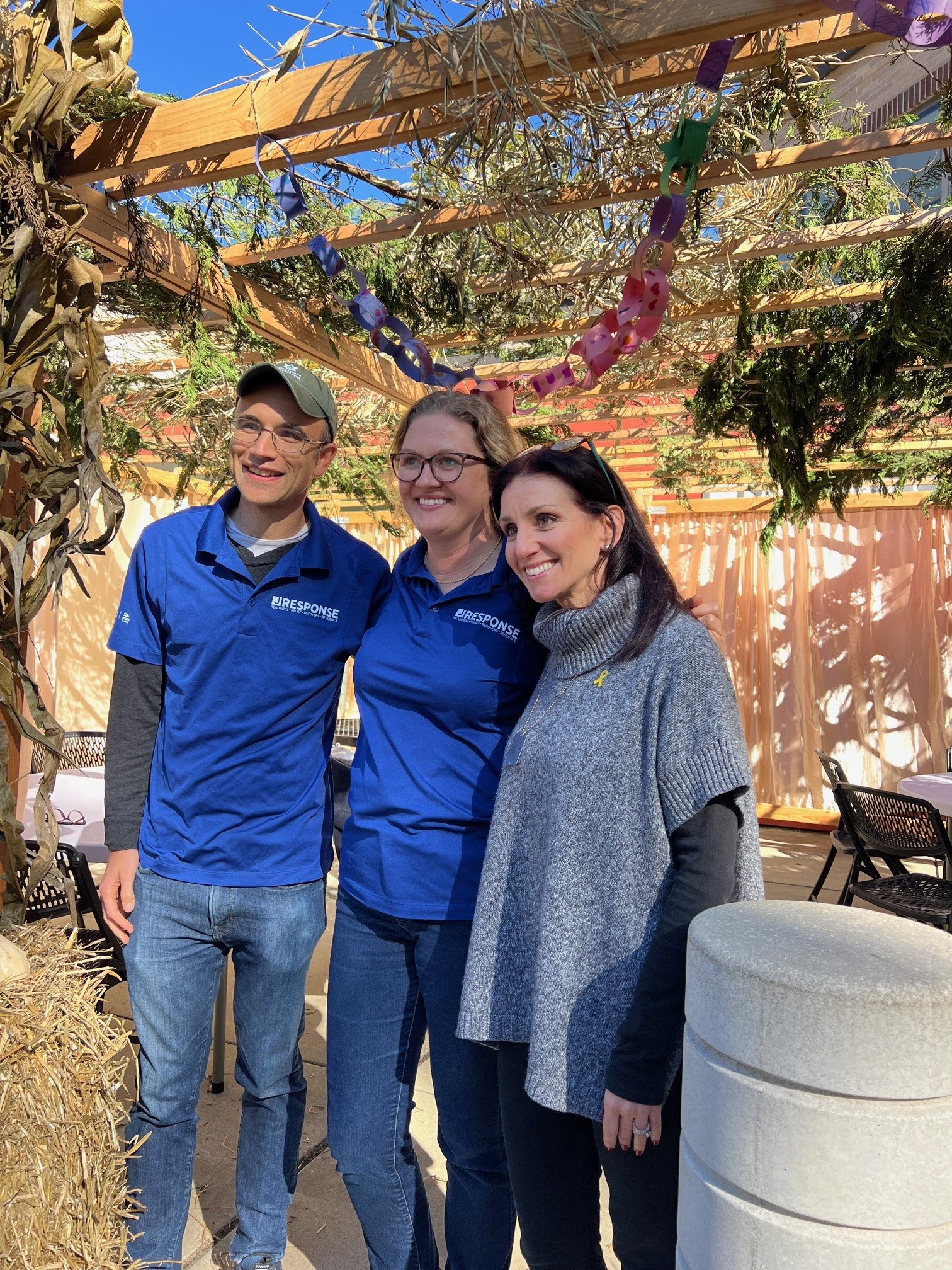
Joseph Nunan, featured right with J Response
The moment JCC Facilities and Security Director Joseph Nunan first realized the true magnitude of Helene on Western North Carolina was as he stood alongside other shocked residents watching dramatic scenes playing out below the Clingman Bridge over the French Broad River.“I have always liked to show my kids what happens to our Western North Carolina rivers when they flood,” he explained. “That day, there were hundreds of people gathered on the bridge, and we had to park and walk just to get close. The river was already six or seven times its normal size. Buildings were under water, and debris was already floating downstream. I remember thinking: We’re witnessing a national emergency. We are one of the news stories now.”
From there, reality set in slowly. His family had filled the bathtub, bought gas and water, and like so many, braced for the unknown. Gratefully, Joseph’s home and family were safe from any significant damage, though they, along with the other hundreds of thousands of people in the region–were left without electricity, water, or the ability to contact family and loved ones in the immediate aftermath.
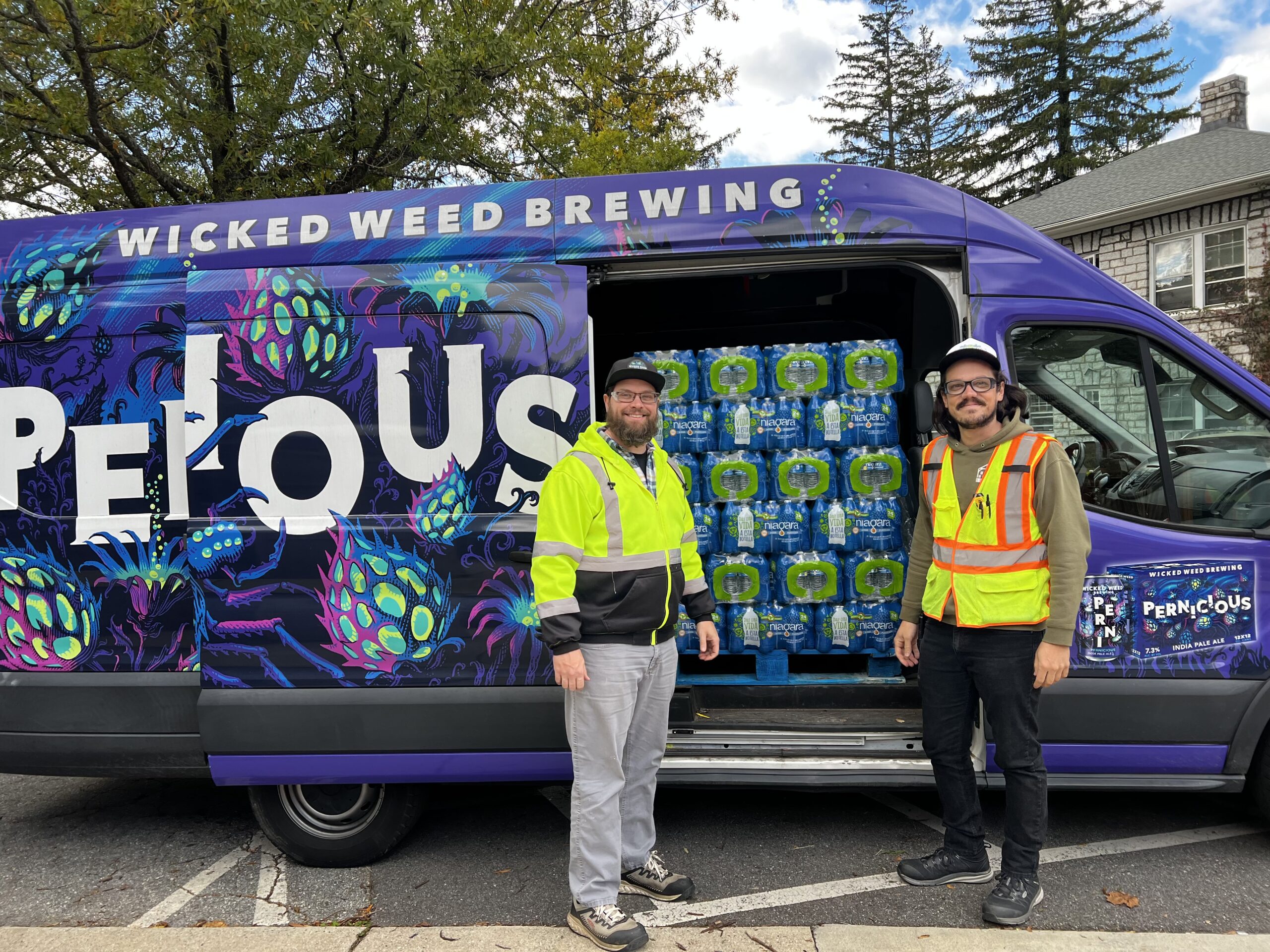
Within 24 hours, Joseph was able to get to the Asheville JCC; he was one of the first people on the scene. After discovering that there was minimal damage to trees and outdoor spaces, and the main building was spared, he felt he was able to turn his focus towards others, only to realize that others were turning their focus towards the J. We started hearing from lots of different governmental agencies and NGOs. From the National Guard delivering water, to Nechama Jewish Response to Disaster staying in the JCC seminar rooms as they responded to the damages of the storm, and to many others, the JCC became a hub for relief work and support.
“I spent the first weekend helping clean up art studios and a restaurant in the River Arts District,” Joseph said. “My family happened to be out of town for a pre-scheduled college tour, so it freed me up and allowed me to find ways to contribute.”
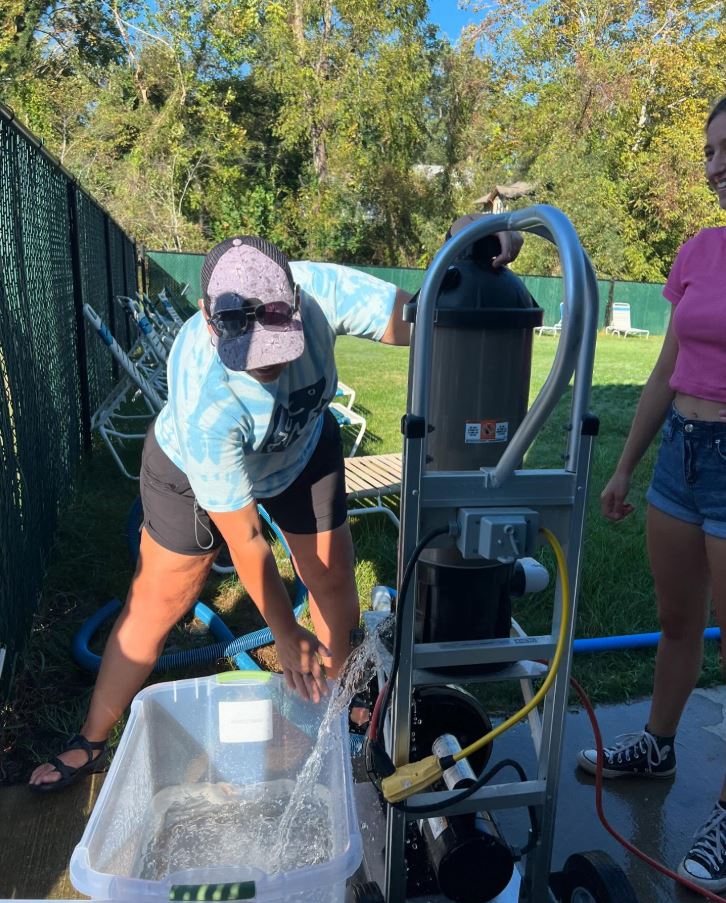
Days later, during his first meeting on site post-storm with Executive Director Ashley Lasher, they met with Aquatics Director Wendy Lawrence to discuss the use of the JCC pool’s water as a resource of non-potable water for Asheville residents to use for flushing toilets. From there the “Fill for Flushing Program” was born. He felt that the Fill for Flushing program was meeting an essential need in our community, while also giving purpose to the J and its volunteers who were looking for ways to help.
Joseph recalls that he often stopped by World Central Kitchen for meals. “It was humbling,” he admitted. “It’s not something we’re culturally used to—accepting help in that way.” He was in a position to help others, but also was the recipient of great generosity and care.
For Joseph, the storm underscored both the vulnerability and resilience of community. In moments of crisis, he discovered, support can come from the most unexpected places—and sometimes, it starts with something as simple as sharing water.
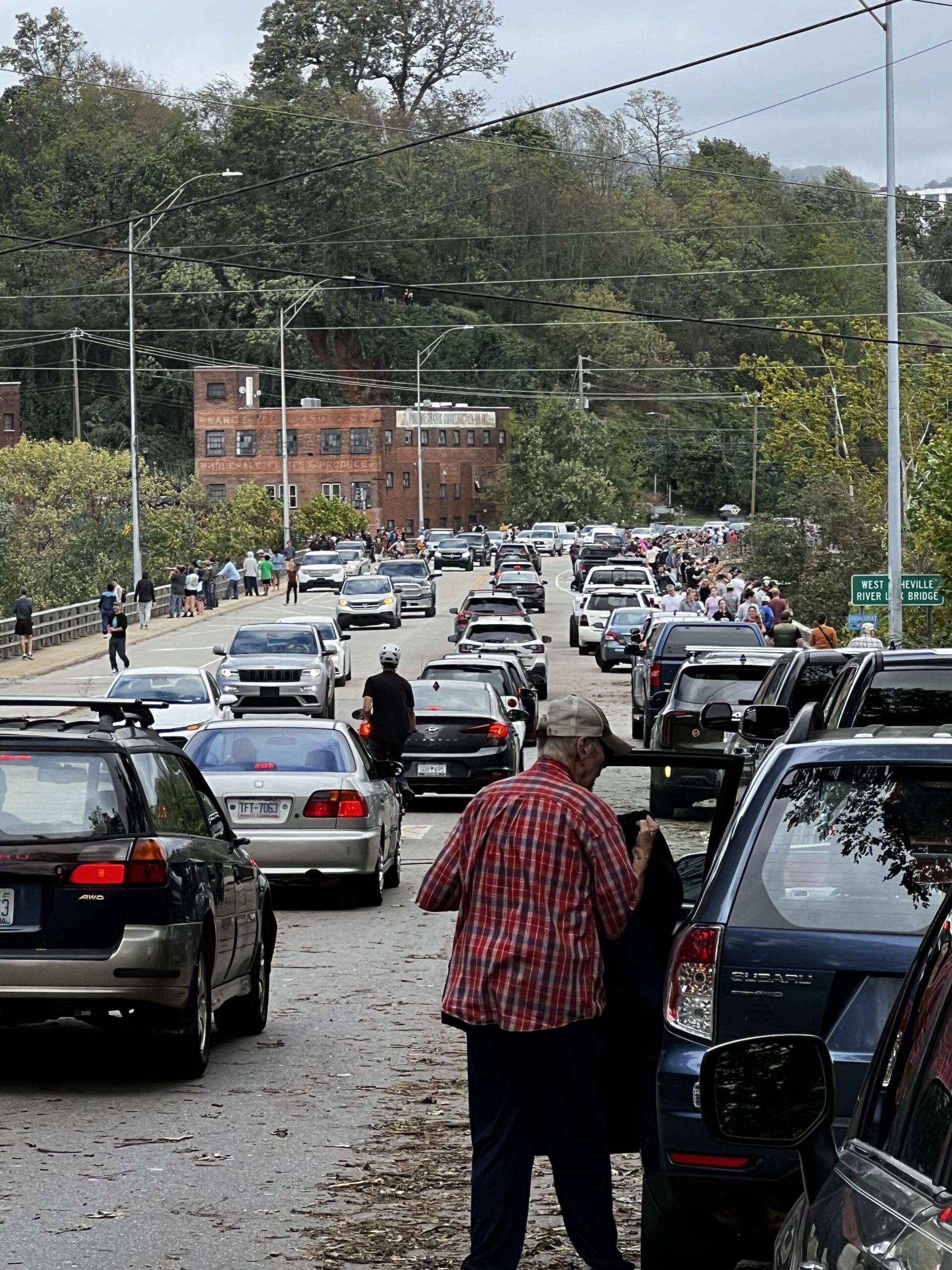




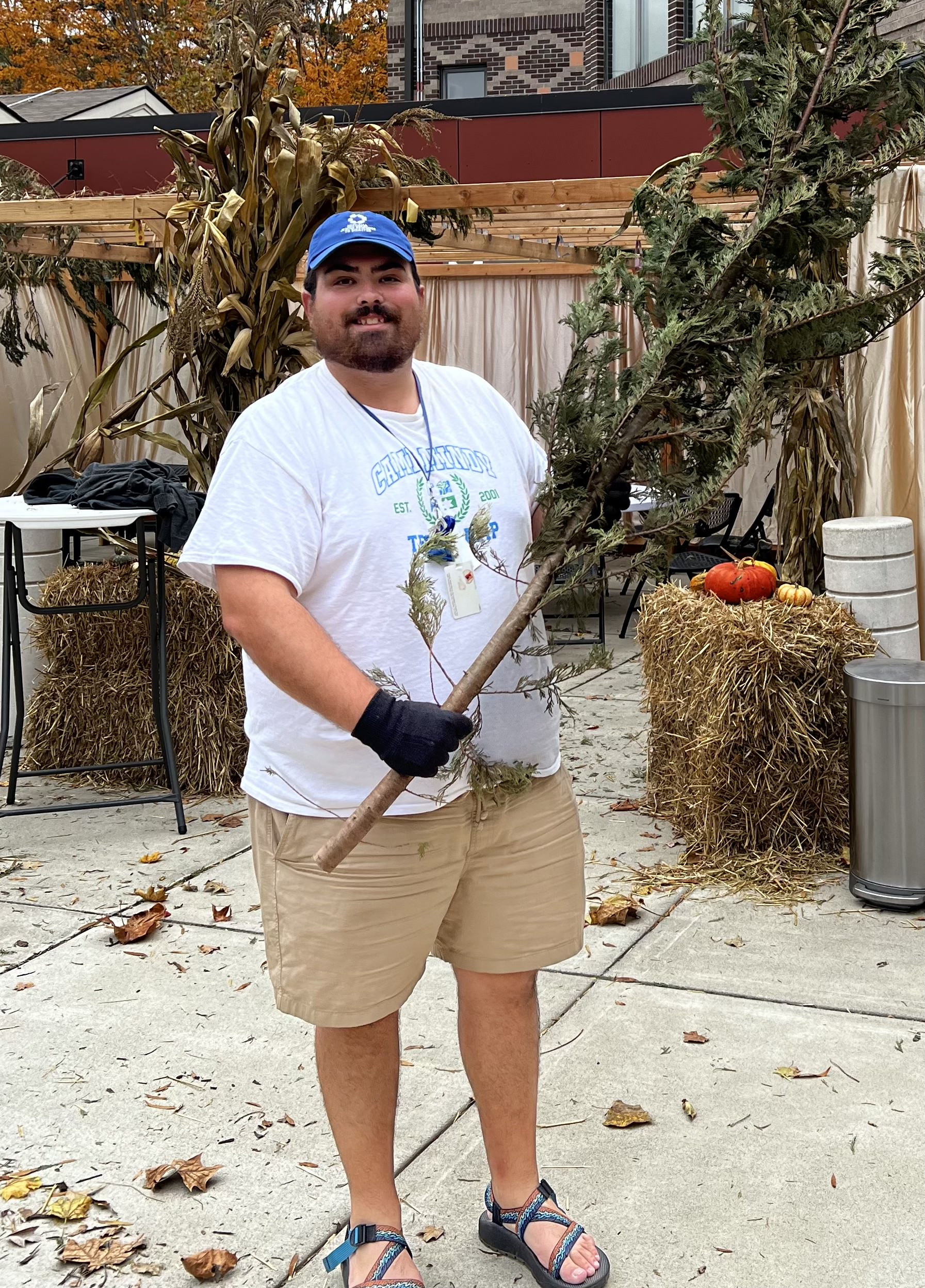

Photos in gallery provided by Joseph Nunan